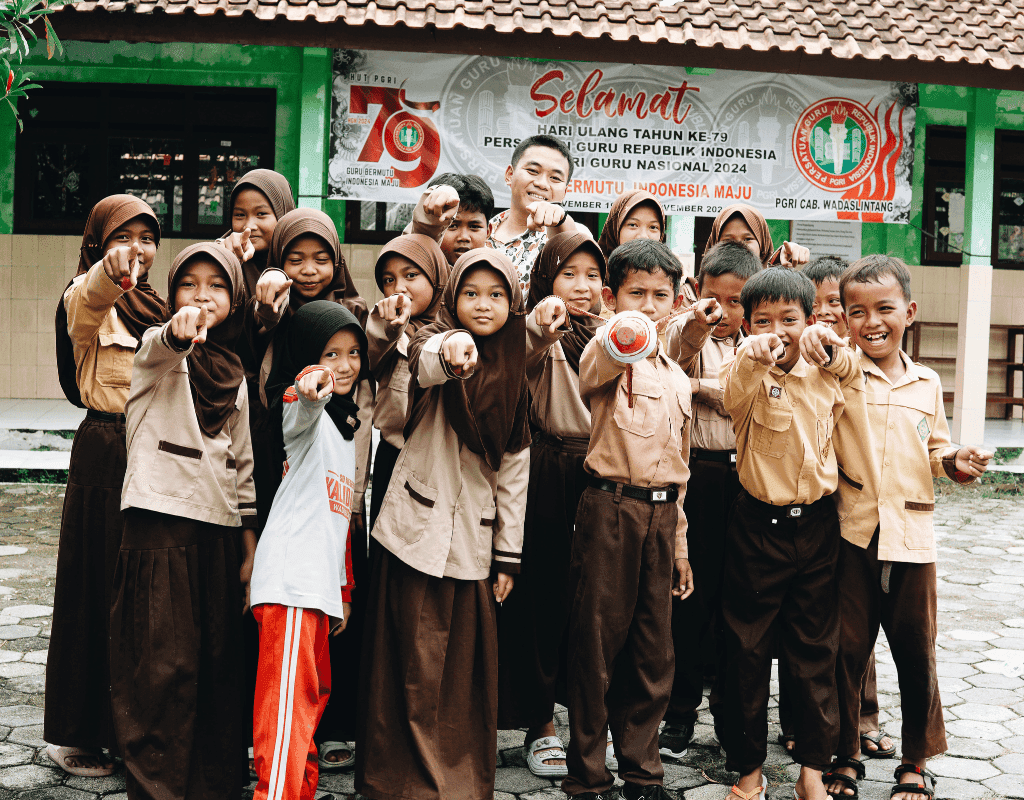
A Hidden Education Crisis
Wonosobo, a regency in Central Java, is facing a silent crisis—one that doesn’t always make headlines but deeply affects its future: limited access to education.
According to the 2022 Human Development Index (HDI), Indonesia ranks 6th in Southeast Asia, with an average of 8.6 years of schooling. However, in Wonosobo, the number drops significantly to just 6.88 years in 2023. This means that, on average, many students only complete education up to junior high school. Even more concerning, only around 40% of students continue to secondary education.
The Link Between Education and Poverty
This gap in education has real consequences. In 2024, Wonosobo was ranked as the third poorest region in Central Java, with 15.28% of its population—over 121,000 people—living in poverty.
One of the key factors behind this is the lack of access to quality education. Without education, individuals often lack the skills needed to secure stable jobs or create economic opportunities. This creates a cycle where families struggle to improve their standard of living, and the next generation faces the same challenges.
Research shows that if all adults received just two more years of schooling, nearly 60 million people could be lifted out of poverty. This highlights a powerful truth: education is one of the most effective tools to break the cycle of poverty.
Falling Behind: The Education Gap
The data further highlights how far Wonosobo lags behind. While the average years of schooling in Central Java is 8.01 years, Wonosobo falls short by nearly two years.
Only 20.47% of people above 15 years old have completed junior high school. The numbers decline further for higher levels—only 16.6% complete high school, and just 3.72% graduate from university.
This gap reflects more than just statistics—it shows limited access, lack of exposure, and fewer opportunities for students to continue their education.
The Missing Spark: Early Exposure to Learning
Education is not just about attending school—it is about opportunity, exposure, and inspiration.
Studies show that 78% of STEM students decide their career path during high school or earlier, yet many students in underserved areas like Wonosobo lack this early exposure. Even more concerning, many students report that no single person influenced their decision to pursue STEM.
Without role models, engaging learning experiences, or access to diverse fields of knowledge, many students may never discover their potential or imagine a different future.
A Future at Risk—and an Opportunity
Wonosobo’s challenge is not just about numbers—it’s about the future of its children.
Without immediate action, the education gap will continue to widen, and opportunities will remain out of reach for many. However, within this challenge lies an opportunity: to rethink how education is delivered, to bring learning closer to underserved communities, and to ensure that every child—regardless of where they live—has the chance to dream bigger and achieve more.